Dook Dook!
Showing posts with label Bone In Meat. Show all posts

Saturday, 26 December 2015

Ferret Nutrition: Get Your Ferret Eating Bones.

How to get your ferret eating edible bone in meat.


"My ferret won't eat chicken wings no matter how hard I try, what can I do?"

This is the 4th time I've received an email in regards to getting ferrets on to bone in meats, so I decided I would write a blog post on the general topic. I will also be speaking a lot from experience, since I had two ferrets; one who would eat right away, and another who needed just a little more convincing that those delicious wings were edible.

Ferrets who were former kibble eaters are known to be quite harder to convince when it comes to transitioning in general, whereas a fairly young kit (baby ferret,  under the age of 6) should be more willing to try a new food. Some ferrets take longer to get used to bone in meats because they need to build up their jaw strength in order to efficiently break down bones. It would be a good idea to also give them some gizzards since gizzards are known to help build jaw strength.

Bone in meats are not necessarily the hardest part of transitioning, even though some will say it is. I did a poll quite recently and surprisingly it was Organs who had a higher vote, and then Bone in meats coming in second. For me personally, It was and wasn't the hardest part. My 6 month old (at the time), Yuki, tried the bone in meat on the first try and was eating more willingly by the second try. Lucky for me, I got him just before he imprinted on the kibble by the sounds of it.  My Female, however, was much harder to convince. She was 8 months at the time. She was incredibly stubborn and I had to continue to work with her even after I graduated from the HFF mentoring program.  She wouldn't touch bone in meats at all. I tried all the tricks and in the end the only thing that Helped me, was a tough love approach—which I will talk about further on in this article.

I hope by the time you finish reading this article that you will find some technique that will help you with getting your stubborn ferret eating bones. It's not impossible, and you can do it!


First, Let's cover what a bone in meat really is in raw diets.

My little girl, Haru, Finally eating BIM on her own in my lap. :)
Bone in meat is what we commonly call it in Raw feeding. It can also be known as meat on bones, or meaty bones, or RMB (raw meaty bones). Bone in meat is meat with bone included, Not bones with little to no meat or stripped meat. To keep things balanced, you need entire raw meaty bones with the flesh included. Examples of Bone in meats are wings, necks, poultry drumsticks, ribs, button bones ect. Many common proteins used for bone in meats are: Chicken, Quail, Rabbit, Turkey, Duck, Pork, Cornish Game Hen; Whole Prey such as, Mice, Rats, Guinea pig, whole small birds, etc. Bone in meats are essential for a ferrets diet. They clean and keep teeth healthy and virtually plaque free.
Raw meat in general is nutritionally superior to cooked meat and commercial pet food as non of its nutritional value has been altered in some way as it is done with cooked meat or pet food.


Cooked Bones?

The bone in meat must be strictly raw for health concerns. Never feed cooked bones to your ferrets as they can pose a serious risk. Once the bone in meat has gone through the cooking process, it can remove the nutritional value of the meat and the bones become more brittle, increasing the risk of splintering. Not only can the cooked bones cause splintering, but they could also result in broke teeth, mouth or tongue damage, or internal damage (Even Blockages!) due to the brittleness of the cooked bone.


How To Start.

There are multiple ways of starting with bone in meats. Here's a good list of what you could do and keep in mind that not all techniques may work so trying a variety is recommended when you're dealing with a stubborn ferret.

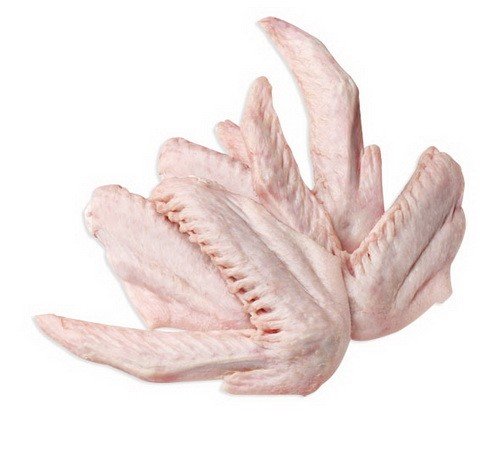
Since Wings are the most used bone in meat when getting a ferret onto bones, here's a photo showing the wing parts. This is a duck wing, and as you can see, its been segmented already. The whole wing has three segments, the drumette, the wingette and the tip. The drumette segment has

I will also show you a diagram I made up showing the different ways I've cut up wings below.


Some people prefer to cut their wings into sections, like I did in the above photo.  I personally prefer to feed them this way since its easier for me to divide them into baggies when I weigh them out for ferret meals. As long as there is still bone in tact, then it will be considered a bone in meat meal. 

It's not recommended that you continuously feed bone in meats mashed or ground (Unless you're okay with brushing on a regular basis).  Feeding ground or even the mashed meat makes eating too easy for ferrets since they don't need to use too much of their jaw strength to consume the meat. That means there are risks of your ferret becoming lazy with eating, meaning they will eat fast and that is a risk for choking. Monitor your ferret to avoid any choking hazards.  It may also cause hiccups, which happens with eating too fast. The main point of feeding raw bones is to ensure the dental health of your ferret. Ground meat is worthless when it comes to cleaning and keeping your ferrets teeth healthy. It's even is worthless for mental stimulation compared to whole bone in meats.


Techniques.

  • Whole: You can cut the wings into segments and attempt to start feeding them with the segments as a whole. If your lucky they may go right for it. If not, try some other techniques.
  • Segments: Cut the whole wing into segments, Drumette, Wingette, & Tip then try feeding them as they are.
  • Sections: Cut the segments (Drumette, Wingette & Tip) Into sections like shown in the photo little further up in this article. They should be bite size for ferrets, even small sections are alright to help get them on bone in meats. Then try feeding them as they are, or drizzle oil on them.
  • Mash: This is the 'start from the start' technique. Simply chop up one of the segments of a wing into a mash. The bones should be completely chopped up so the entire meal looks like a mash. Over time, Increase the sizes but chopping them less and less until the ferret is eating the whole segment without the use of mashing. Mashing can also be used as a grind. So if you have a grinder, simply grind up the bone in meats and simply introduce small bits of bone in meats and increase over time. Keep in mind that you will have to check and brush teeth until your ferret is completely on solid bone in meats.
  • Hand Feeding: If all else fails, you can resort to hand feeding. With hand feeding a wing, you can either use the tip, wingette or drumette. Wings are preferred since drumettes are more dense and larger compared to the wingette or tip. They can be segmented, or sectioned or in chunks, what ever you feel like using (just increase over time).
  • Oil or Warm Water: Using a tasty animal based oil such as salmon oil, Drizzle little over the meat and then offer it to them. This can also be used with hand feeding. Using warm water, run the meat under a running tap of warm water then straight away offer it to them. These techniques are used to entice the ferret. They may and may not work for all.


Hand Feeding / Tough Love Technique.

I found my stubborn girl, Haru disliked the tip. Possibly because it wasn't as fleshy compared to the drumette or wingette. So I started with the wingette.  A good idea would to be to divide the wingette into a half.  I think the whole wingette may be little overwhelming, so thats how I got the idea into dividing it. It also opens up the flesh more to entice the ferret. Then using one half of the wingette, you need to grab hold of your ferret and gently rub the end of the fleshy bone along their gum-lines. They will wriggle and paw you away, but do your best to see this through. This is a tough love technique so obviously they're going to hate it and probably hate you for doing it, but in the end it works. The next thing you want to do is to watch your ferret and feel for an opening. When your ferret slightly opens their mouth, stick the bone in on the side  (not all the way in) then rub it against their carnassial teeth or hold it there firmly until they start a chewing motion. Remember to give them a lot of verbal encouragement. 
"Good boy/girl" "Taste the yummy meat. You'll love it." "That's it, great job! You're such a smart ferret!" "Come on lovely, open your mouth and chew on this yummy piece of meat~" "You did it! Good ferret! Keep going! Little more!" 
Verbal encouragement really does help a lot. Ferrets are intelligent little creatures, so little verbal encouragement can go a long way with them. When they do something good, like finally chewing a piece of meat, make a HUGE deal out of it. They need to know that what they're doing is good and they are very good little ferrets for doing it.


Back to the talk on the hand feeding. Once they begin to chew, hold it there for them for about five minutes. They don't have to finish the entire half, so only do this for no more than five minutes per session. You can stop and put down the meat (unless they really are going at it) and give your ferret a good rub and tell them how pleased you are with how much progress they've made regardless of how much or how little they tried. Let them rest afterwards, and proceed again in a couple of hours time. I repeated this for a couple of days and sometimes tried the small five minute sessions in between meals. It helps to build bonds and I loved this technique. (I even had to use this for whole prey- shudder!)    Eventually you may notice that you are needing less and less encouragement in order for them to try and chew the bone in meat. When this happens, try and let go of your hold to the wingette half. If they go to run off, grab hold of them and revert back to firmly holding it for them while they chew. Continue to try and let go until they are sitting by themselves in your lap and eating their bone in meat by themselves.


Starting bone in meat from the start.

When it comes to a stubborn ferret who doesn't recognise this delicious raw meat as edible food, then the best way to get them on the good stuff is by starting small and building your way up.

Chicken wings are the best starter meat to bone in meats (I probably mentioned this before). They are small and fairly easy to chop up by using a cleaver. You can start by chopping it up until it resembles a meaty mash like the photo in the left hand side.

You could try and place it down for your ferret and see how they deal with it, however if they do turn their noses up on this delicious meal then you will have to grab some and rub it along their gums. The point of that is to get them used to the new strange tastes. Remember they don't recognise this as food. Another good advise would be to feed only a small amount. Not the amount shown in the photo on the left. Less makes it less intimidating for them. :) If they take a liking, then simply increase the amount. If this also fails then you will have to resort to hand feeding them. This is where you will have to start the tough love with your ferret. They will struggle and try to push you away, but don't give in to their childish antics.

Grab your ferret (gently of course!) and hold them in your lap. They will attempt to wriggle and run off, but don't let them. If you feel uncomfortable when it comes to feeding this way, you will have to try your best to pull through this. It is for their health and it is all worth it in the end. If you find you have a really wriggly ferret, a good way to get them in your control would be to tuck their back legs underneath your armpit. They should have support on your arm as well and with your free hand try hand feeding them.

Most people will say to scruff, however I do not find that technique necessary. Scruffing should never be used for anything that is not medical, or emergency. I'm not going to go into detail on that here though.

Once your ferret is eating the mashed bone in meat you can then increase the size to sections like in the photo I have posted little further up in this article. Example of sections of the entire wing are in the right hand side photo.  You can either take away the mash completely and introduce sections, or you can introduce a couple of sections into the mash and gradually reduce the amount of mash. Another technique would be to simply reduce the mashing little by little until the ferret is eating the bone in meats without it being mashed.  Either way, your ferret should have the same result by being on bone in meats completely or at least eating segments, or sections.


Conclusion

Some ferrets take longer to get onto bone in meats, and some take less. In the end, as long as you're persistent and patient as the ferrent, you should eventually have a ferret who is eating their bone in meats like a pro. I hope that all that I have written has helped you in one way or another. If your ferret is eating bone in meats, I'm very interested in hearing how you went about it. Please leave me some comments and tell me how you went. If you have a question, don't hesitate to comment below.

If you need assistance with transitioning your ferret to a natural raw diet, feel free to come and visit The Holistic Ferret Forum where you can apply for a Mentor to help guide you through the process.


Wednesday, 16 December 2015

Ferret Nutrition, Vets, Bacteria & Other Topics.


Ferrets are unique animals, and due to being incredibly unique, they have also have a unique diet and food requirements.They have similar requirements to that of a cat, who are also an obligate carnivore like our furry companions. Obligate carnivore, you've probably heard that somewhere haven't you? It's a really interesting word. When I first heard it, I didn't quite understand what an Obligate carnivore was, but now It sounds quite simple.


What is an Obligate Carnivore?
Ferrets, being obligate carnivores, are designed to eat whole, small prey animals including: small to medium-sized mammals, birds, eggs,frogs, crustaceans, fish, worms, and insects. That is what they do and what they would eat in the wild. It is also what wild polecats --Ancestor of the ferret-- eat in the wild. It is biologically essential for obligate carnivores to consume a natural diet in order for them to thrive and live a long healthy life. Not only is it good for their overall health, a ferret in particular, who is on a natural diet is also less likely to get diseases* compared to if it were on a kibble based diet. Obligate carnivores are strict meat eaters. 
Their body is designed to eat only meat. Though they can consume plant matter or carbs found in kibble, their bodies cannot properly digest it like herbivores or omnivores can, and they certainly cannot metabolise the nutrients as efficiently as they can with meat so their little organs have to work overtime to produce any enzymes needed for the digestion. There are some things that cannot be found in plants, that they need to eat from meat, Taurine for example. Their bodies cannot produce it, so they require it in their diet. Its essential. A deficiency in taurine may cause blindness among other things. I have a better explanation on my article on Cooked Meat in regards to nutrient loss in cooked meat etc.

Read more at http://www.hakibeferret.net
Come Visit The Holistic Ferret Forum
*Diseases caused by diet and nutrition. I am not implying that an animal is safe from X diseases. Consuming inappropriate diets will only speed up the process of diseases such as insulinoma.

The diet of choice in which ferrets are designed to handle is completely raw meat, or even whole prey— even combination of the two.


What is a Species Appropriate Diet?
Raw feeding is the practice of feeding a domestic carnivore a diet primarily of uncooked meat, edible uncooked bones, and organs. It is most commonly known as frankenprey by the raw feeding community. The purpose of Frankenprey is the mimic whole animals like they would eat in the wild. Species appropriate basically means to feed a diet which the specific animal is designed to eat, such as what their wild counterparts are eating out in the wild and based on how they are made, inside and out, from organs used for digesting or using nutrients, all the way to what their pearly white canines are telling us about the inside of their jaws.

Feeding a not-so-species-appropriate-diet, can lead to a lot of problems health wise. You want to ensure that your ferret is eating what it is meant to be eating, not what some pet food industry claims you should be feeding. A majority of the time, pet food industries are about money, rather than thinking of the overall health of your pet. 


But My Vet Said....
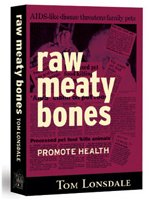
"Sometimes a lucky coincidence or chance encounter helps throw new light on an old situation. That's what happened to me. Finally, after five years at veterinary school and fifteen years as a qualified vet, I saw that processed foods do immense harm and natural foods work wonders for the health of dogs and other carnivores." ― Dr. Tom Lonsdale.
Check out the book
called Raw Meaty Bones
By Dr Tom Lonsdale.

Unfortunately, a majority of vets are brainwashed so to speak, into believing that commercial pet food is the appropriate choice of food for our carnivorous companion animals. The main reason as to this is due to the fact that junk pet food companies fund vet schools in order to train these vets.  Vets in general have very limited education on proper nutrition for companion animals. They could go onto further study in nutrition after spending 5 or so years at vet school, however no doubt that it would be biased due to pet food companies having complete control over them. The rest of the studies would have to be done in their own time, and throughout their career. After they become qualified, it is their decision on what to believe and how they advise their clients.  Remember that a veterinarian can only advise. What ever you decide to do for the sake of the animal when it comes to nutrition is all in your power. A majority end up being like a personal sales person for these pet food companies, whereas the odd few support the natural species appropriate diet and have common sense when it comes to this junk food pet industry.  A Holistic Vet is more likely to accept the natural diet, so even if it costs a little more than a regular vet, it would probably be a good idea to find a Holistic Vet when possible. 


When it comes to traditional vets, You may have been told something along the lines of "ferrets are true carnivores and should be fed a high fat, high protein, high quality kibble because it has the adequate nutritional needs for your ferret" etc etc.  Some may even go as far as to tell you lies or bend, warp words to make the raw diet sound like it is a danger to your ferrets health. They do this with good intentions most of the time because yes, feeding raw can be dangerous-- if not done correctly. However providing you do your research, and even find a mentor, then you have nothing to fear.  

First of all, there is no nutritional standard for ferrets, you can read more on that here. The next thing they may say to you is something like "Raw increases the risk of pathogen exposure in both handling the food for the human and consuming raw or under cooked animal source protein diets in pets."  Let's talk about Bacteria now.


Bacteria.
Carnivores, are built to handle a large amount of bacteria. They are carnivores. 
They even contain bacteria in their guts. Bacteria is everywhere, whether it be good bacteria or bad bacteria. Ferrets in particular, can handle a great deal of bacteria when it comes to diet, most are not susceptible to salmonella and efficiently pass it without infection and kibble fed ferrets are even known to shed salmonella in their stools. A ferrets digestive system is very short (only 3-4 hours) so that leaves no time for the salmonella which needs 12-72 hours, or even e.coli, which needs 3-4 days to incubate. That makes it highly unlikely that these illnesses would affect the ferret. Its not impossible,  just very very very very very very unlikely. For more information in regards to Bacteria, I recommend you check out this file from HFF.

As for humans, the risk is there. However as long as you take simple precautions, it would be highly unlikely that you would get sick.  Be sure to clean shelves, counter tops, refrigerators, freezers, utensils, sponges and towels to present bacterial contamination. It is especially important to wash all utensils and your hands with soap and hot water after handling one food and before handling another. This helps prevent cross-contamination in which, for example, bacteria in raw meat could be transferred to other foods, such as vegetables. It would be wise to use a different board for cutting different foods such as produce and meat. Wash cutting boards with hot, soapy water after each use; then rinse and air dry or pat dry with fresh paper towels. 

Most raw feeders, feed human grade meat and as we all know already, Human grade meat is less likely to be contaminated with something like salmonella or E.coli than lets say, commercial raw pet food. Not saying its safe, because it can happen even with human
grade, but humane grade is a lot safer than pet grade. A majority of the time, commercial raw pet food, is classed as pet grade meat. Forget the "Organic" this or "Human grade" that, If Its commercial pet food, its most likely containing pet grade pet food somewhere in it. 

“To date, raw pet foods have not been associated with salmonellosis in humans. ”

According to Dr. Becker, Pet owners have been feeding raw diets to their dogs and cats for decades, yet to date, not one documented case of raw pet food causing illness in humans has been reported.

The important thing is to do your research and you decide if raw is for you.
Obviously not everyone can do it, but as long as you research and learn, then surely you can do it for your pet.


Carbohydrates, Milks & Plant Matter.
Ferrets are not able to easily digest the complex carbohydrates in fruit and vegetable matter, so never feed your ferret any kind of plant matter, especially fruit, even as a treat. 


Keep in mind that fruit tends to be high in sugar and sugar can increase the chances of the ferret getting insulinoma later on in life.  I will cover Toxic foods in a later post.

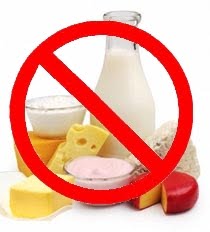
Another interesting fact is that ferrets are lactose intolerant and are unable to digest lactose, a sugar molecule found in milk, or other dairy products. It is also recommended to avoid Goats milk as that has around the same lactose content to that of cows milk. Lactose free milk too should be avoided. It contains an enzyme called lactase. Lactase splits the larger sugar molecule Lactose into two smaller sugar groups called glucose and galactose. That basically makes the milk easier to digest and makes the sugar ready to digest beforehand. Sugar is linked to insulinoma, so giving lactose free milk is a bad idea.
Confused? 
Read this article which goes into full depth as to why ferrets should NOT be consuming milk of any kind!


Does Raw Mean That My Ferret Is Disease Free?
No. Obviously, a natural diet cannot keep your ferret completely safe from diseases such as Lymphoma, Insulinoma, Adrenal (etc). Genetics, among other factors, also play a role in if a ferret is to get this or that. However that is for another topic.

A Natural diet-- when done correctly-- has been known to help ferrets who have insulinoma manage their blood glucose. This would mainly be due to the fact that a natural diet is void of carbs or things that their little organs must work over time in order to attempt to digest it. When you feed a species appropriate diet, your ferret is eating what is naturally designed to eat. It's body doesn't need to work over time to try and digest or metabolise something that really they just shouldn't be having in their diets! Compared to kibble, which usually contains a majority of harmful ingredients, the raw diet is balanced and every diet can be designed according to the ferret. 


Balance Is A Must
You don't just feed Meat. You feed a majority of different types. From Organs, To Muscle, To Raw Meaty Bones. You can even feed whole prey, which in itself is
completely balanced due to being a whole animal, organs and all. Balance is crucial for your ferrets health. An unbalanced diet can be disastrous, and potentially dangerous to your ferret. There is much that needs to be learned, but all you need is basic nutrition to get it balanced and your ferret can live a long and healthy life.

If you were to feed a diet consisting of simply chicken, that would not be beneficial long term for your ferret. Try and avoid having a diet too heavy in any one single protein (animal type meat). Instead, have a minimum of 3 proteins other than: Chicken, Rabbit, Cornish Game Hen, or Fish. It's also recommended to have at least one type of red meat in the menu. 
This is to ensure enough Vitamin B, Iron and Taurine is in the diet. 

Variety is also a key to having a nice balance. The more variety of meats, the more you ensure that the ferret is receiving all the nutrients it needs. No meat is the same. Some proteins have more vitamins and minerals than others, some less. Even some certain cuts of meats contain more or less. By feeding a diet like the Frankenprey diet, along with a variety of meats, you can certainly ensure that it is balanced. For more information on balance and variety, please check out these articles.


Raw Vs Kibble.
With the species appropriate diet, you know what you are feeding, you can even go as far as to look into meat source if you would prefer to feed animals that have been treated and slaughtered humanely. Whereas with kibbles, the manufactures may keep hidden ingredients from being listed on the product. Things such as Excitotoxins (Commonly labeled as flavour or flavour enhancers etc), or Ethoxyquin. You will also notice that a majority of kibbles fail to list the percentage when it comes to certain things, such as salt (which should be avoided). Have you ever seen something like... Meat Meal? Never lists what meat is in the meal, so it is highly likely a 4-D Meat. Could be from any source. Very scary stuff and should really be avoided at all costs. If you don't know what is in the meal, who's to say that your ferret may or may not get an allergy or an intolerance to it?

Many Kibbles contain carbohydrates in the handful, along with plant matter and plant based proteins. Kibbles also use by-products, which are 4-D Meats. The animals used in kibbles can be collected from almost any source. There is no control set in place over quality or contamination. Any kind of animal can be included: “4-D animals” (dead, diseased, disabled, or dying before slaughter), goats, pigs, sheep, horses, rats, animals which have been euthanised at animal shelters, restaurant and supermarket waste, road kill, etc.  You could very well be feeding pets, to your pet. Isn't that a little concerning?

Ferrets were not designed to eat Kibble (Dry pet food), their teeth are not made for chewing, grinding up the biscuit. Each of the ferret's 34 adult teeth serve a specific purpose, and allow for the efficient consumption of raw and whole prey foods. 

To read more on the teeth of the ferret, please click here to follow up on my article about teeth. 
Photo Source.

Their teeth are designed for flesh, organ and bone, not an abrasive biscuit. Kibble is the most significant single contributors to the incase of periodontal disease in companion animals. Most companion animals on a kibble diet over the age of 3 (cats, dogs, even ferrets) have some form of periodontal disease. IT DOES NOT CLEAN TEETH, and thus causes build up of plaque and tartar, which then leads to poor dental health of our ferrets.  It increases the chance of teeth wear since the kibble grinds away at the ferrets teeth at faster rates, not simply because their teeth are smaller, but because they have proportionately less volume of dentine when compared to the teeth of larger carnivores. 

To read more on why kibble destroys the teeth of a ferret, please click here to see the article written my Bob Church.

-------

Thank you for reading my blog post in regards to general ferret nutrition. I covered quite a few subjects, and I do hope that this becomes useful to anyone reading. For more information I highly recommend you check out The Holistic Ferret Forum website. If you have questions, you can contact me VIA email or through my Facebook Page.

-------

If you are interested in switching to a raw, whole prey (or both) diet, but are not sure where to start or would appreciate someone to guide you, then I highly recommend signing up for the mentoring program on The Holistic Ferret Forum.


Back To Top